Let's be real for a second. You've probably typed a hundred prompts into AI image generators by now. And yeah, the results are technically impressive — flawless lighting, perfect anatomy, aesthetic out the wazoo. But here's the thing: most of it looks the same. That dreamy cyberpunk cityscape? Seen it. That ethereal fantasy goddess? Yawn.
What actually stops you mid-scroll? Something that makes you react. Something that catches you off guard. That's where humor comes in.
I've been messing around with Vizly Image Studio lately, and honestly, it's the first AI tool that made me laugh at my own creations. Not because the images were bad — but because they had personality.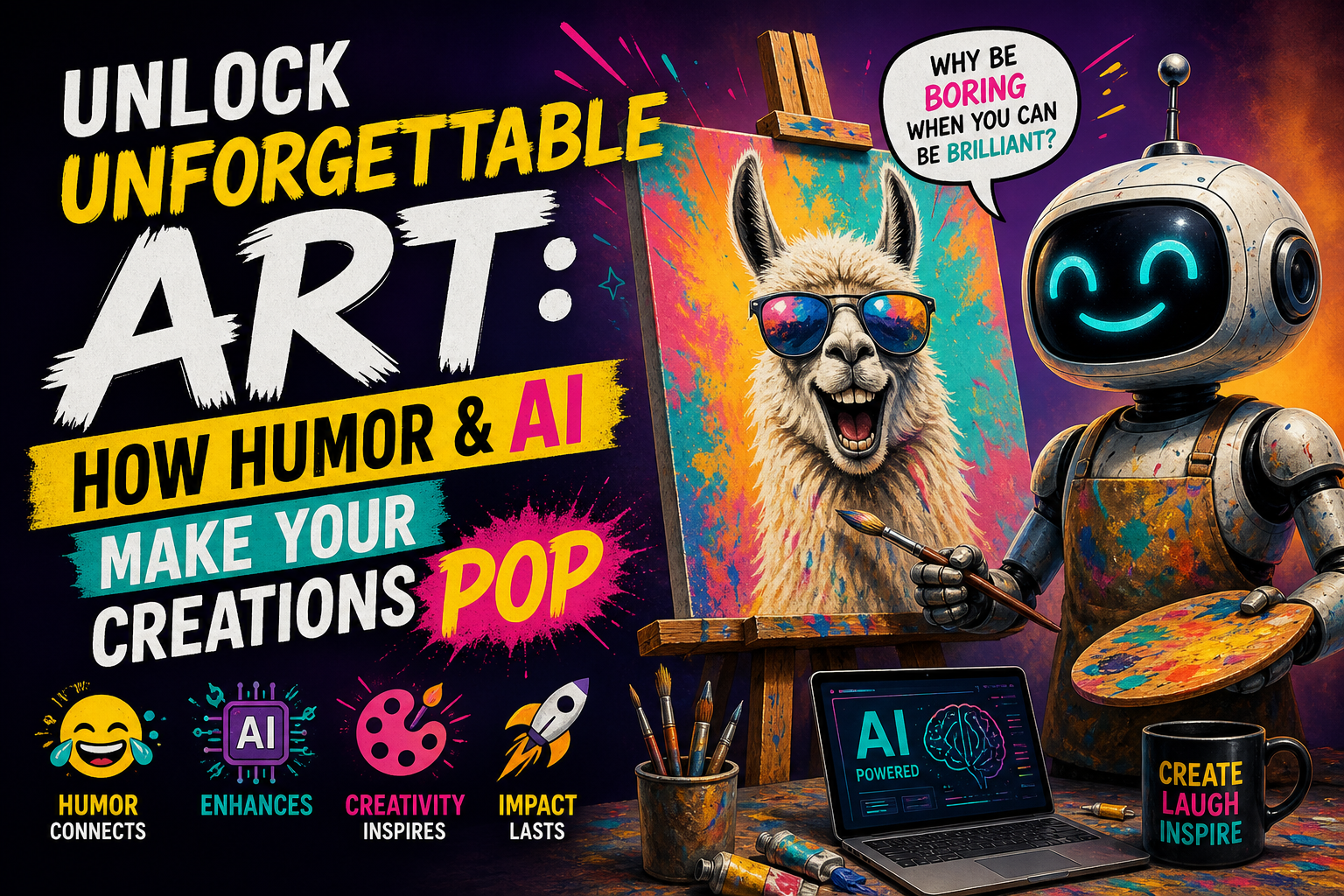
Why most AI art feels dead inside
The default mode for AI image generators is "beautiful but boring." They optimize for technically correct outputs — which means they play it safe. A majestic lion in the savanna at sunset. A beautiful woman with flowing hair in golden light. It's all very... Pinterest board 2018.
What they miss is the thing that makes art stick in your brain: unexpectedness. Humor creates that gap between what you expect and what you actually see. And when Vizly Image Studio nails that gap, the results are genuinely unforgettable.
The weird prompts that actually worked
So I started testing. Instead of "a cat sitting on a chair," I tried: "a cat pretending to be a CEO in a board meeting, corporate art style, deadpan expression". The output? A feline in a tiny suit, paws on a mahogany table, with that thousand-yard stare that says "I've seen the quarterly reports." I saved it. I sent it to three friends. I made it my Slack avatar.
Another one: "Renaissance painting but it's a raccoon trying to wash a cotton candy — confusion, dramatic lighting, Caravaggio vibes". Vizly gave me a masterpiece of existential struggle. The subtlety in the raccoon's eyes was genuinely hilarious.
The point isn't that these are "good" in a fine art sense. It's that they're memorable. You remember them hours later. That's the kind of engagement that makes people actually care about your creations.
The tricky part: humor is subjective and AI doesn't get jokes
Here's the honest tradeoff. Vizly's prompt understanding is good, but it doesn't "get" humor the way a human does. You can't just type "make it funny" and expect results. The humor comes from the tension between what you describe and what the model interprets literally.
Sometimes it misses. I tried: "a dog ordering coffee at a hipster cafe, very serious" and got a dog sitting near a coffee cup. That's it. No attitude. No vibe. The failure rate for humor prompts is higher than for standard prompts, maybe 1 in 4 really lands.
But when it works? That 25% hit rate gives you images that feel alive. They have character. They have a story. Compared to other generators I've used, Vizly handles the nuanced visual storytelling better — things like facial expressions, composition, and that "comedic timing" in a still image.
Where humor + AI art actually makes sense
This isn't just for memes. Think about where you'd actually use this:
- Social media posts that stop the scroll (brand accounts are realizing this)
- Presentation decks that don't put your audience to sleep
- Personal projects that actually express your personality, not just the model's defaults
- Creative blocks — when you're stuck, a funny prompt unlocks something in your brain
I'm not saying every image needs a punchline. But if your AI art all feels the same, try injecting a little chaos. Vizly Image Studio handles the "beautiful" part surprisingly well for the price — and if you push it toward the absurd, you get stuff that looks like you made it. Not a machine.
Humor is the shortcut from "nice image" to "I remember that." And in a sea of AI-generated sameness, being remembered is the only thing that actually matters.
Comments
Leave a Comment