You're working on a project that needs the look of a worn leather-bound classic—maybe a book cover mockup, a vintage social media post, or a backdrop for your own writing. Hunting down actual old books is slow, expensive, and often impractical. They're heavy, fragile, and you can't always find the exact style you need.
Vizly Image Studio won't put a dusty folio in your hands, but it can generate surprisingly convincing images of old books based on a text description. I tested it with a few prompts like "antique French novel, cracked spine, gold foil lettering, dim library light" and "stack of worn 19th-century children's books, faded cloth covers, late afternoon sun." The results weren't photorealistic, but they had genuine character—slightly imperfect edges, uneven lighting, and a softness that felt right.
One concrete use: a friend who runs a small literary podcast needed fresh episode artwork. Instead of buying vintage books online, she typed "open 1920s poetry book, coffee stain on page, warm lamp glow" and got a set of images that worked well as overlays with her logo. The key was iterating: Vizly's first pass sometimes gave her "floaty" books without a table or shelf, so she added "resting on dark oak surface." That fixed it.
Where Vizly's charm meets real limits
The "classic charm" comes through when you focus on mood and texture, not accuracy to a specific real title. If you need the exact cover of a known first edition—like "The Great Gatsby" 1925 jacket—you're out of luck. Vizly doesn't replicate copyrighted designs, and the model's knowledge of obscure bindings is shallow. Also, the AI sometimes overdoes the aged effect, making books look dirtier than gracefully worn. A prompt like "gently aged" versus "very old and dusty" made a meaningful difference.
Another limitation: text on the spine or cover tends to be gibberish. For some uses that's fine—a blurred background or a pile of books in a shadow. But if you need readable titles, you'll have to Photoshop them in afterward. I also noticed that consistent series (same binding style, different colors) require separate generations that won't perfectly match. It's not a 3D model studio.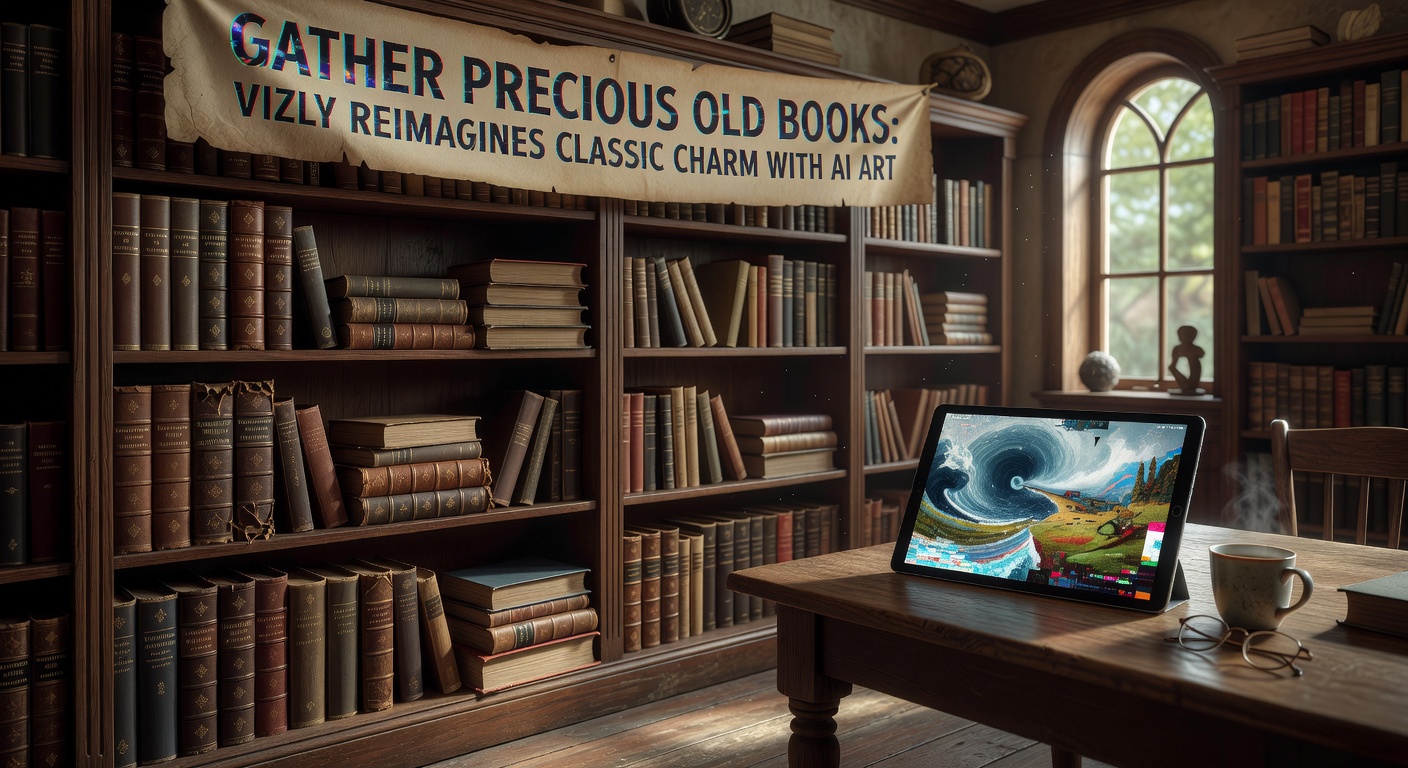
Who should use this and who might bounce
Vizly makes sense if your goal is evocative visuals: book-stack ads, nostalgic blog headers, concept art for a novel set in a Victorian library. It's fast and cheap compared to photographing real props or buying stock photos. But if you're a serious collector documenting actual editions or a designer needing precise reproduction, the AI will frustrate you. The charm is real, but it's loose, interpretive charm—not archival accuracy.
For my own test, I settled on hiring a photographer for a one-time shoot of real vintage books, and using Vizly for quick variations and mood boards. That hybrid approach feels like the honest way to use AI art for classic aesthetics. It saves time and money where fidelity isn't critical, but I won't pretend a generated image could fool a rare-book dealer.
Comments
Leave a Comment