Finding decent reference images for historical fiction or tabletop RPG campaigns is a constant headache. You type “Roman legion in morning fog” into Google and get either a gladiator movie still or a blurry photo of a reenactment that looks like a weekend hobbyist meetup. That’s where the idea of using an AI generator like Vizly starts making practical sense—not for “art,” but for getting a usable visual that carries the right mood.
Prompting History Without Overdoing It
Vizly handles historical prompts better than I expected if you keep the description specific but not overwritten. For instance, “Medieval scribe copying a manuscript by candlelight, dim warm light, dust motes, worn wooden desk” gave me a picture that actually looked like a monk working, not a fantasy character posing. The lighting was convincing—no harsh digital glow. The detail on the manuscript was a bit smudged (the AI tends to blur small text), but the overall scene felt real enough to use as a chapter header or campaign mood image.
Where it stumbles is when you throw in too many period-specific artifacts. I tried “Viking chieftain holding a Dane ax, wearing a mail hauberk, standing on a misty shore.” The ax head came out looking like a cartoon paddle, and the mail resembled a chain-link fence pattern. You have to accept that Vizly will approximate some details—so if your scene depends on historical accuracy of a specific helmet type, you’ll need to check the output carefully or iterate.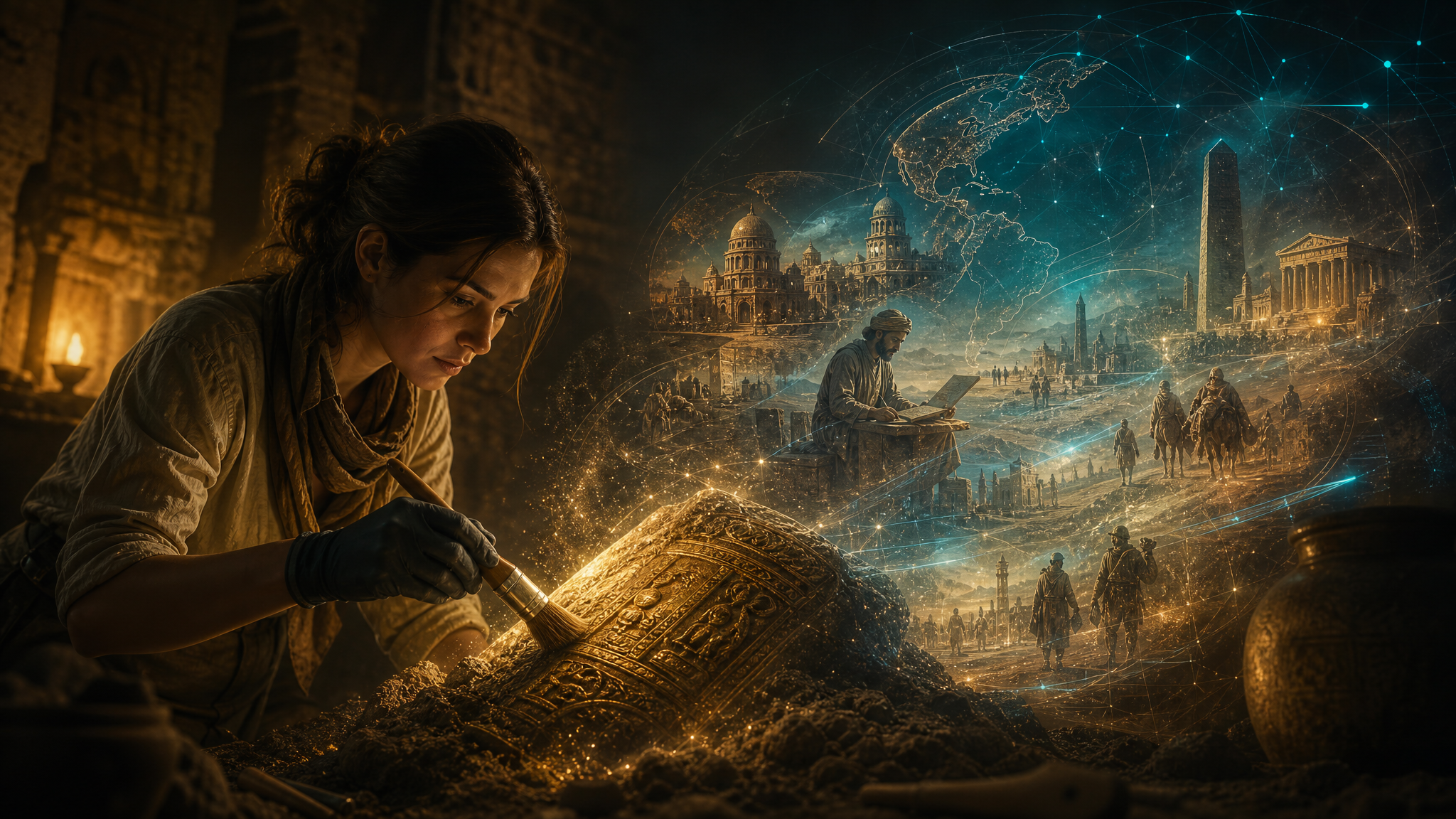
Three Scenarios Where It Actually Shines
First: mood references for writers. If you’re drafting a novel set in Han Dynasty China and need a quick visual of a tea house courtyard in rain, Vizly produces something atmospheric without requiring a librarian’s keyword research. I got a wet stone path and wooden pillars in minutes—good enough to stick on a mood board.
Second: educational storytelling. A teacher described a medieval siege scene for a lesson on castle defenses. Vizly generated a rough but engaging illustration that showed trebuchets and layered walls. The kids could point at parts and ask questions. It wasn’t a museum-grade reconstruction, but it worked for conversation.
Third: non-commercial worldbuilding for TTRPGs. Dungeon Masters often need visual grabs for their tables. “Abandoned Egyptian temple entrance, sandstorm approaching” produced a strong composition with two massive statues and a dark doorway. The sandstorm effect was genuinely gritty.
What You’re Trading Off
The clarity on faces and hands is inconsistent, especially in complex group scenes. A “Roman imperial court with senators debating” gave me a sea of expressionless dough faces. For single-figure scenes with simple backgrounds, the output is solid. For crowds or action poses, you’ll spend extra credits regenerating. Also, Vizly’s style leans cinematic—expect dramatic lighting even when your prompt doesn’t ask for it. If you want flat, textbook-style illustration, you’ll need to explicitly request “flat lighting, simple colors.”
And then there’s the question of intent. If you’re a historian or researcher needing accurate period reconstructions, Vizly is not the tool—you’ll get speculative fiction vibes. But if you’re a writer, gamer, or content creator looking for evocative historical visuals that don’t require hours of image hunting, it’s a fast shortcut worth the occasional dud.
The bottom line: Vizly brings historical tales to life with more hit than miss, especially for atmospheric scenes. Just don’t ask it to render a medieval cannon with correct proportions, and you’ll walk away with something you can actually use.
Comments
Leave a Comment