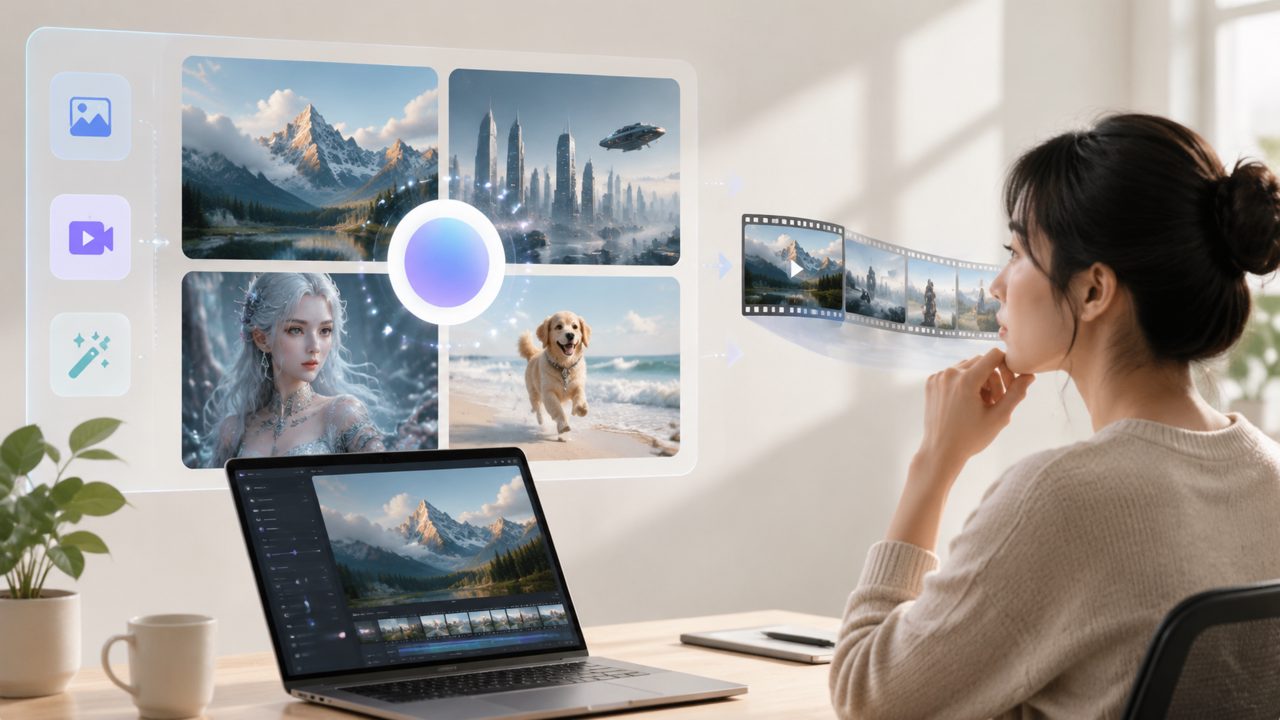
I’ve been testing several AI image and video tools recently, partly because I needed quick visuals for a project and didn’t want to wait minutes per output. When I heard about Vizly – marketed as a real time ai image and video generation tool – I was skeptical that it could actually deliver speed without sacrificing quality. So I spent a few days pushing it in different scenarios to see where it holds up and where it doesn’t. Below are answers to the most common doubts that came up during testing, written FAQ‑style.
Is Vizly truly a real‑time generator?
Short answer: mostly, yes – for images. When I typed a prompt like “cyberpunk cafe at night, neon reflections,” the first image appeared in about 2 seconds. That’s fast enough to feel instant during a brainstorming session. But the “real time” claim gets a little fuzzy with video. A 5‑second clip took around 15 seconds on a standard connection. Not terrible, but not quite “real time” in the way you’d expect from a live camera feed. The tradeoff is that you can edit the prompt on the fly and regenerate quickly, which still beats most competitors that lock you into a rendering queue.
Can I really use it as a free ai image and video generator in 2026?
The free tier exists, but it has limits. You get a set number of credits per day – enough for maybe 10‑15 image generations or 3‑4 short video clips. For casual tinkering, that’s fine. But if you’re trying to run a content pipeline on a budget, you’ll hit the wall fast. The output on the free plan also includes a small watermark by default, and the resolution tops out at 720p for video. That said, for testing prompts or creating quick thumbnails for personal use, it’s one of the more generous free ai image and video generator 2026 options I’ve seen. Just don’t expect unlimited commercial usage without upgrading.
How does it compare to other ai text to image video generator free offerings?
I compared Vizly against two other free tools I had bookmarked. The main difference was speed: Vizly generated images 2‑3x faster, even on the same Wi‑Fi. But the quality wasn’t always ahead. For simple abstract or concept‑style visuals, Vizly looked cleaner. For realistic portraits or complex scenes, another tool (with a longer wait) produced sharper details. I also noticed that Vizly sometimes struggled with hands or text in images – a common AI issue, but more frequent here. If you need a free ai image and video generator free of charge for rapid iteration, Vizly wins on workflow pace. If you need polished final assets, you may need to use it as a sketchpad and then refine elsewhere.
What are the realistic use cases for this tool?
After a few evenings of testing, I’d say it shines in three areas: content mockups (social media post ideas, blog headers), storyboard concepts for video projects, and creative brainstorming where you want to see 20 variations of a scene in 10 minutes. I personally used it to generate background images for a short animation – worked well because I could regenerate each frame’s base texture quickly. One caveat: the video output tends to flicker during motion, so it’s not ready for client‑ready video production. But for internal pitching or mood boards, it’s practical.
Any limitations I should know about before committing?
Yes, a few. Vizly’s video generation currently maxes out at 10 seconds, and the clip often has a slight warping effect on moving subjects. Also, prompt adherence isn’t perfect – I asked for “a red fox in a snowy field” and got a white fox in a green meadow twice before I added more descriptors. The UI itself is clean, but the “style presets” menu feels a bit thin compared to other tools that offer dozens of artistic filters. If you’re looking for a real time ai image and video generation tool that gives you total control, be prepared to write longer, more detailed prompts.
After this testing, I’d say Vizly is a solid option if your priority is speed and you’re okay with iterative tweaking. It isn’t the most polished generator on the market, but for a free‑tier starting point in 2026, it does the job without the usual waiting frustration. Try it for quick concepts, but don’t expect it to replace a full production pipeline just yet.
Comments
Leave a Comment